

About ACM Publications
For more than 60 years, the best and brightest minds in computing have come to ACM to meet, share ideas, publish their work and change the world. ACM's publications are among the most respected and highly cited in the field because of their longstanding focus on quality and their ability to attract pioneering thought leaders from both academia and industry.
Search Digital Library
Ceasing Print Publication of ACM Journals and Transactions
ACM has made the decision to cease print publication for ACM’s journals and transactions as of January 2024. There were several motivations for this change: ACM wants to be as environmentally friendly as possible; print journals lack the new features and functionality of the electronic versions in the ACM Digital Library; and print subscriptions, which have been declining for years, have now reached a level where the time was right to sunset print. Please contact [email protected] should you have any questions.

ACM Boasts Strong Impact Factors
The journals of ACM once again had an impressive showing in the latest Journal Citation Reports release from Clarivate, with notable performances across the entire portfolio and fifteen journals receiving their first impact factors—including four titles from the innovative Proceedings of the ACM (PACM) program. ACM's flagship magazine Communications of the ACM (CACM) continued its dominance by receiving an all-time high impact factor of 22.7, placing it first in all three of its categories, and ACM Computing Surveys (CSUR) which continued to ascend with an impact factor of 16.6, placing it third in the Computer Science, Theory & Methods category.
New Open Access Publishing Model for ICPS Coming in 2024
In a major step in its transition to fully Open Access (OA) publication of all content on the ACM Digital Library, ACM will transition the International Conference Proceedings Series (ICPS) to a fully OA publishing model from January 2024. In the new model, all ICPS papers will be made OA upon publication, and existing ICPS papers will be converted to OA. Some authors who are not at ACM Open institutions will be required to pay Article Processing Charges (APCs). The model will apply to all conferences for which the Call for Papers will be issued on or after January 1, 2024.

ACM Opens First 50 Years Backfile
ACM has opened the articles published during the first 50 years of its publishing program, from 1951 through the end of 2000, These articles are now open and freely available to view and download via the ACM Digital Library. ACM’s first 50 years backfile contains more than 117,500 articles on a wide range of computing topics. In addition to articles published between 1951 and 2000, ACM has also opened related and supplemental materials including data sets, software, slides, audio recordings, and videos.

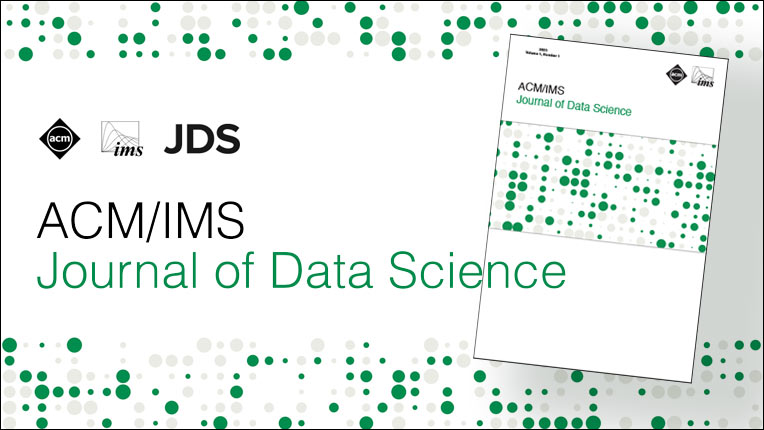
Inaugural Issues of ACM/IMS Journal of Data Science
ACM and IMS (Institute of Mathematical Statistics) have announced the publication of the first issues of the ACM/IMS Journal of Data Science (JDS), a new peer-reviewed publication. The scope of the journal is multi-disciplinary and broad, spanning statistics, machine learning, computer systems, and the societal implications of data science. JDS accepts original papers as well as novel surveys that summarize and organize critical subject areas. The ACM/IMS Journal of Data Science is a Gold Open Access publication, permanently and freely available online for anyone, anywhere to read.
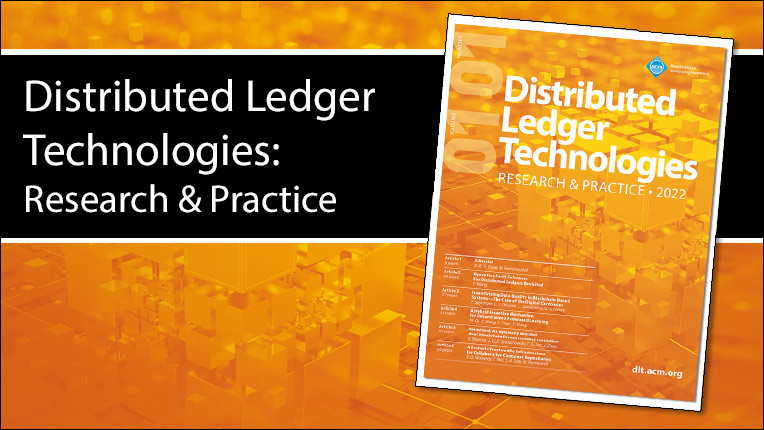
Inaugural Issue: Distributed Ledger Technologies: Research and Practice
The inaugural issue of ACM Distributed Ledger Technologies: Research and Practice (DLT) is now available for download. DLT is a peer-reviewed journal that publishes high quality, interdisciplinary research on the research and development, real-world deployment, and/or evaluation of distributed ledger technologies (DLT) such as blockchain, cryptocurrency, and smart contracts. DLT offers a blend of original research work and innovative practice-driven advancements by internationally distinguished DLT experts and researchers from academia, and public and private sector organizations. For more information and to submit your work, visit the journal homepage.
TELO Accepted for Scopus Coverage
ACM Transactions on Evolutionary Learning and Optimization (TELO) has been accepted for Scopus coverage. Similar to Web of Science, Scopus is an extensive yet selective abstract and citation database that provides comprehensive coverage of peer-reviewed journals, books, conference abstracts, and patents across the natural sciences, social sciences, arts, and humanities. By having its content included in Scopus, TELO’s content will be discoverable at 7,000 of the world’s top research institutions.
New Journal: ACM Games: Research and Practice
Games: Research and Practice (Games) offers a lighthouse for games research that defines the state of the art on games and playable media across academic research and industry practice. Inclusive in community, discipline, method, and game form, it publishes major reviews, tutorials, and advances on games and playable media that are both practically useful and grounded in robust evidence and argument, alongside case studies, opinions, and dialogues on new developments that will change games. For more information and to submit your work, visit the homepage.

Inaugural Issue: ACM Journal on Responsible Computing Launches
The inaugural issue of ACM Journal on Responsible Computing (JRC) is now available for download. JRC will publish high-quality original research at the intersection of computing, ethics, information, law, policy, responsible innovation, and social responsibility from a wide range of convergent, interdisciplinary, multidisciplinary, and transdisciplinary perspectives. Editor-in-Chief Kenneth R. Fleischmann is a Professor and Director of Undergraduate Studies at the University of Texas at Austin School of Information. Read the ACM news release and visit the journal homepage.
Inaugural Issue: Collective Intelligence
The inaugural issue of Collective Intelligence (COLA) is now available for download. Co-published by SAGE in collaboration with NESTA, COLA is a global, peer-reviewed, open-access journal that publishes trans-disciplinary work bearing on collective intelligence across the disciplines. The journal embraces a policy of creative rigor to facilitate the discovery of principles that apply across scales and new ways of harnessing the collective to improve social, ecological, and economic outcomes. For more information and to submit your work, visit the journal homepage.
ACM Transactions on Programming Languages and Systems Goes Gold OA
As of January 2022, and for a two-year period, all papers published in ACM Transactions on Programming Languages (TOPLAS) will be published as Gold Open Access (OA) and will be free to read and share via the ACM Digital Library. During the first two years, authors will be given the option (but not required) to pay the APC. Archival content will be made open access as of January 1, 2022 as well. For those authors financially unable to pay the APC as of 2024, ACM has developed a waiver program to ensure that no accepted articles to TOPLAS go unpublished as a result of financial need.
Inaugural Issue: Transactions on Recommender Systems
ACM Transactions on Recommender Systems (TORS) is now available for download. TORS publishes high quality papers that address various aspects of recommender systems research such as algorithms, user experience, and the impact and value of such systems. The journal takes a holistic view of the field and calls for contributions from different subfields of computer science and information systems such as machine learning, data mining, information retrieval, web-based systems, data science and big data, and human-computer interaction. For more information and to submit your work, visit the journal homepage.
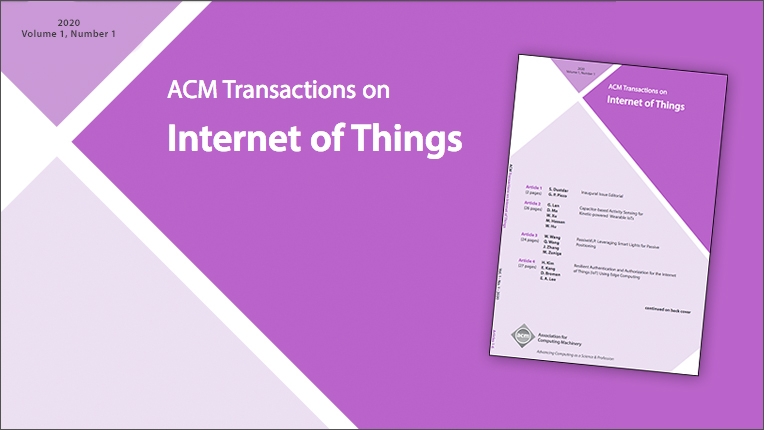
ACM Transactions on Internet of Things Launches
The new journal ACM Transactions on Internet of Things (TIOT) will cover applications, communication networks, data analytics, wearable devices, and many more topics in the context of IoT, with a focus on system designs, end-to-end architectures, and enabling technologies. TIOT solicits research that provides experimental evidence of its effectiveness in realistic scenarios. The inaugural issue is now available in the ACM Digital Library.
Formal Aspects of Computing Journal Now Accepting Submissions
ACM and BCS, The Chartered Institute for IT will co-publish the journal Formal Aspects of Computing starting in 2022. Currently published by Springer Nature for BCS, the journal's scope includes fundamental computational concepts, fault-tolerant design, theorem-proving support, state-exploration tools, formal underpinning of widely-used notations and methods, history of formal methods, and more. With the new agreement, the journal will transition to Gold Open Access status. Read the ACM news release and visit the submissions site.
Proceedings of the ACM Series
Proceedings of the ACM (PACM) is a journal series that launched in 2017. The series was created in recognition of the fact that conference-centric publishing disadvantages the CS community with respect to other scientific disciplines when competing with researchers from other disciplines for top science awards and career progression, and the fact that top ACM conferences have demonstrated high quality and high impact on the field. See PACMs on Programming Languages, Interactive, Mobile, Wearable and Ubiquitous Technologies, Measurement and Analysis of Computing Systems, and HCI.

PACM on Management of Data
Proceedings of the ACM on Management of Data (PACMMOD) is a journal concerned with the principles, algorithms, techniques, systems, and applications of database management systems, data management technology, and science and engineering of data. We invite the submission of original data management, data engineering, and data science research targeting the data life cycle of real applications, studying phenomena at scales, complexities, and granularities never before possible.

Open Access Publication & ACM
ACM exists to support the needs of the computing community. For over sixty years ACM has developed publications and publication policies to maximize the visibility, access, impact, trusted-source, and reach of the research it publishes for a global community of researchers, educators, students, and practitioners.
ACM Books
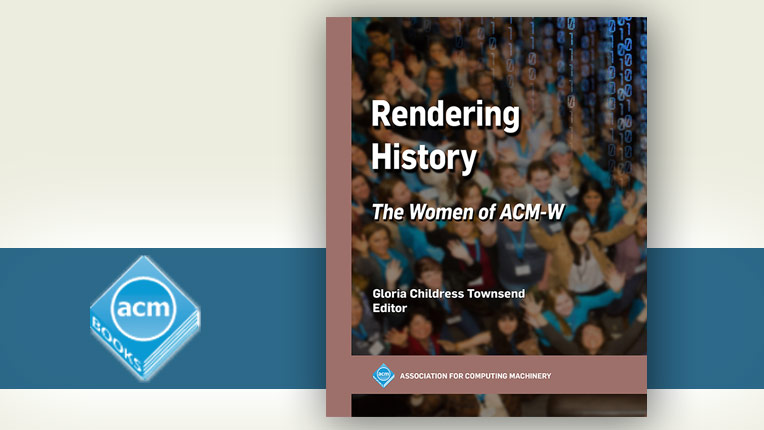
Newest ACM Books Title: Rendering History by Gloria Childress Townsend
Published in celebration of ACM-W’s 30th birthday, Rendering History: The Women of ACM-W is divided into three parts The first section provides a traditional history that details the evolution of ACM-W’s projects. The next section allows the women of ACM-W to tell their own stories. What motivated them to trade personal time and energy for work that would change the face of computing for women and young girls? And final section of the book provides an annotated bibliography of the research that launched ACM-W and continued to inform its projects over the next 30 years.
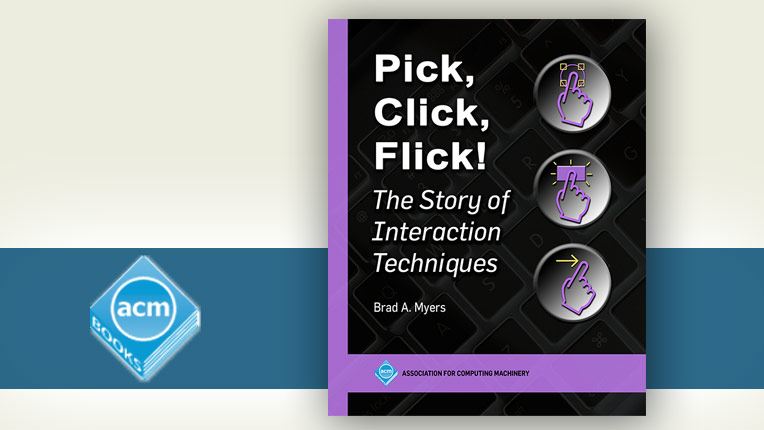
New Title from ACM Books: Pick, Click, Flick!: The Story of Interaction Techniques
Pick, Click, Flick!: The Story of Interaction Techniques by Brad A. Myers provides a comprehensive study of the many ways to interact with computers and computerized devices. An “interaction technique” starts when the user performs an action that causes an electronic device to respond, and includes the direct feedback from the device to the user. It is written for anyone interested in interaction techniques including computer scientists and designers working on human-computer interaction, as well as implementers and consumers who want to understand and get the most out of their digital devices.
New Title from ACM Books: Digital Dreams Have Become Nightmares
Digital Dreams Have Become Nightmares: What We Must Do by Ronald M. Baecker and Jonathan Grudin offers a compelling discussion of the digital dreams that have come true, their often unintended side effects (nightmares), and what must be done to counteract the nightmares. It is intended as an impetus to further conversation not only in homes and workplaces, but in academic courses and even legislative debates. Equally importantly, the book is a presentation of what digital technology professionals need to know about these topics and the actions they should undertake individually and in support of other citizens, societal initiatives, and government.

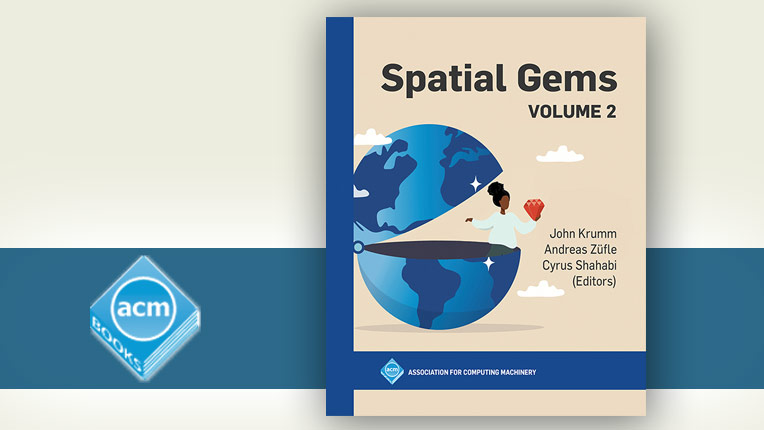
New Title from ACM Books: Spatial Gems, Volume 2
Spatial Gems, Volume 2, by John Krumm, Andreas Züfle, and Cyrus Shahabi, is a follow-up to the first Spatial Gems volume and a further collection of techniques contributed by leading research experts. Although these approaches were developed by their authors as part of larger research projects, the gems represent fundamental solutions that are generically applicable to many different problems. The goal is to share these useful techniques—not yet in textbooks and often buried inside technical research papers—with software developers, graduate students, professors, and professional researchers.
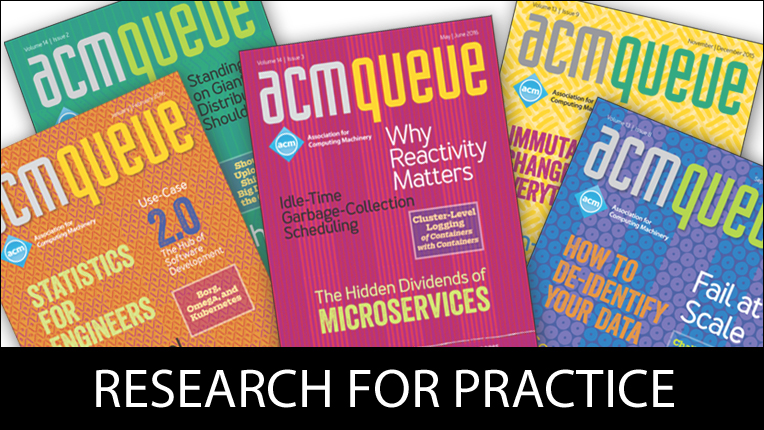
Practical Content from ACM Queue
Multiparty Computation: To Secure Privacy, Do the Math
MPC (multiparty computation) was introduced to the world in 1982—at about the same time the Commodore 64 was announced. Why are we still talking about MPC more than 40 years later? Well, it turns out MPC is based on some extremely complex math, which is like nectar to anyone in the field of cryptography. And, over the past decade, MPC has come to be exhumed from the archives and harnessed as one of the most powerful tools available for the protection of sensitive data. Here, in a discussion with Nigel Smart, Joshua W. Baron, Sanjay Saravanan, Jordan Brandt, and Atefeh Mashatan, we explore some of the implications of these advances.

Automatically Testing Database Systems
ACM Queue’s "Research for Practice" serves up expert-curated guides to the best of computing research, and relates these breakthroughs to the challenges that software engineers face every day. In this installment, "Automatically Testing Database Systems," Manuel Rigger (Assistant Professor in the School of Computing at the National University of Singapore) presents three papers. The first focuses on the problem of automatically synthesizing sophisticated test oracles that check whether the outputs of a database history are correct. The second co-designs input generation and test oracle in order to focus strictly on bugs in concurrency control. The last covers a diverse input space of SQL dialects while relying on the "built-in" test oracle of system crashes.
Publish in the ACM International Conference Proceedings Series
The ACM International Conference Proceeding Series (ICPS) provides a mechanism to publish the contents of conferences, technical symposia and workshops and thereby increase their visibility among the international computing community. The goal of this program is to enable conferences and workshops to cost effectively produce print proceedings for their attendees, while also providing maximum dissemination of the material through electronic channels, specifically, the ACM Digital Library.

Overleaf Allows Authors to Collaborate
Overleaf is a free, cloud-based, collaborative authoring tool that provides an ACM LaTeX authoring template. Authors can write using Rich Text mode or regular Source mode. The platform automatically compiles the document while an author writes, so the author can see what the finished file will look like in real time. The template allows authors to submit manuscripts easily to ACM from within the Overleaf platform.

ACM Policies on Authorship
Anyone listed as Author on an ACM paper must meet certain criteria, including making substantial intellectual contributions to some components of the original work and drafting and/or revising the paper.
Authors submitting papers for peer-review to ACM publications will represent that the paper submitted is original; that the work submitted is not currently under review at any other publication venue; that they have the rights and intent to publish the work in the venue to which it is submitted; and that any prior publications on which this work is based are documented appropriately.
Read the entire set of criteria in the Policy on Authorship.
ACM Conflict-of-Interest Policy
The Conflict of Interest policy outlines what constitutes a conflict of interest (COI) for ACM publications; who is in a position to identify and report potential COIs; and how a potential COI should be managed. The policy applies to any material that is formally reviewed or refereed as per ACM policy; awards based on content published in ACM venues; and authors, reviewers, editors, conference program committee members, judges, and other persons associated with ACM-published materials.
The policy provides specific guidelines for common instances with the goal of assisting in the process of identifying and resolving potential conflicts of interest. It also describes how the policy can be augmented, and how exceptions may be approved.
Innovation Is Overrated: A Provocation
In little over a decade, software moved a great portion of the economy online, with the innovative technology born out of this revolution concentrated among a handful of private companies. The result is that while we live in technological abundance, we depend on corporations to provide indispensable digital infrastructure and services. In this article from the March 2024 issue of Communications of the ACM, Filippo Gualtiero Blancato asserts that while innovation is crucial to economic development, what if focusing so much on protecting incumbent innovation is the wrong way to go?
ACM Transactions on Sensor Networks Welcomes New Editor-in-Chief
ACM Transactions on Sensor Networks (TOSN) welcomes Wen Hu as its new Editor-in-Chief. The appointment is from February 1, 2024 to January 31, 2027. Hu is a Professor in the School of Computer Science and Engineering at The University of New South Wales.

ACM Transactions on Privacy and Security Welcomes New Editor-in-Chief
ACM Transactions on Privacy and Security (TOPS) welcomes Michael Waidner as its new Editor-in-Chief for the term of February 1, 2024 to January 31, 2027. Waidner is a Professor at ATHENE | TU Darmstadt | Fraunhofer SIT.

ACM Transactions on Knowledge Discovery from Data Welcomes New Editor-in-Chief
ACM Transactions on Knowledge Discovery from Data (TKDD) welcomes Jian Pei as Editor-in-Chief. The appointment is from February 1, 2024 to January 31, 2027. Pei is an ACM Fellow and Arthur S. Pearse Distinguished Professor of Computer Science at Duke University.

ACM Transactions on Design Automation of Electronic Systems Welcomes New Editor-in-Chief
ACM Transactions on Design Automation of Electronic Systems (TODAES) welcomes Jiang Hu as its new Editor-in-Chief for the term of February 1, 2024 to January 31, 2027. Hu is a Professor of Electrical & Computer Engineering at Texas A & M University.

ACM Updates Its Peer Review Policy
ACM is pleased to announce that its Publications Board has approved an updated Peer Review Policy. If you have any questions regarding the update, the associated FAQ addresses topics such as confidentiality, the use of large language models in the peer review process, conflicts of interest, and several other relevant concerns. If there are any issues that are not addressed in the FAQ, please contact [email protected].

TEAC Paper Awarded Kalai Prize
The 2019 paper "The Unreasonable Fairness of Maximum Nash Welfare" by ACM Transactions on Economics and Computation (TEAC) has been awarded the 2024 Prize in Game Theory and Computer Science of the Game Theory Society in Honour of Ehud Kalai. The prize is given every four years in recognition of Kalai’s role in promoting the connection of the two research areas.
ACM Statement on Trade & Government Sanctions for ACM Publications
ACM supports the unrestricted publication and dissemination of scientific, educational, and technical information to the global community of computing professionals and students. However, at the same time ACM is bound to comply with laws and regulations in the legal jurisdictions ACM operates—including in the US, EU, UK, and elsewhere around the world—that have the potential to limit how ACM operates around the world with respect to Publications. Specifically, Geographic Sanctions and Sanctions on Individuals.

Inaugural Issue: ACM Journal on Autonomous Transportation Systems
The inaugural issue of ACM Journal on Autonomous Transportation Systems (JATS) is now available for download. JATS aims to cover the topics in design, analysis, and control of autonomous transportation systems. The area of autonomous transportation systems is at a critical point where issues related to data, models, computation, and scale are increasingly important. Similarly, multiple disciplines including computer science, electrical engineering, civil engineering, etc., are approaching these problems with a significant growth in research activity. For further information and to submit your manuscript, please visit the journal homepage.
ACM Computing Surveys Increases Issue Frequency
Due to the considerable growth in submissions and publications of ACM Computing Surveys (CSUR), the number of CSUR issues published yearly will increase from six to nine. The change will take effect with Volume 54 in 2022. CSUR's comprehensive, readable surveys and tutorial papers give guided tours through the literature and explain topics to those who seek to learn the basics of areas outside their specialties in an accessible way.
Publons Reviewer Recognition Service
In an effort to better serve—and incentivize—ACM reviewers, ACM has partnered with the Publons Reviewer Recognition Service, which allows reviewers to create a profile and to track, verify and promote their efforts for ACM publications. Publons—operating on over 5,000 scholarly journals—is owned by Clarivate Analytics and offers a verified record of a reviewer’s editorial activity for a publication that can be used for CVs, profiles, tenure packages, and more.

Promote Your Work with Kudos
Kudos is a free service that you can use to promote your work more effectively. After your paper has been accepted and uploaded to the ACM Digital Library, you'll receive an invitation from Kudos to create an account and add a plain-language description. The Kudos “Shareable PDF” allows you to generate a PDF to upload to websites, such as your homepage, institutional repository, preprint services, and social media. This PDF contains a link to the full-text version of your article in the ACM DL, adding to download and citation counts.

Learn More about Features in the New ACM Digital Library
More precise search. Alerts when new articles in your area of interest are published. Expanded article pages. More informative author profile pages. Integrated journal homepages and expanded content on ACM SIGs and conferences. These are just some of the features you'll find in the new ACM DL. Check out our series of emails about these and other enhancements, and discover more about the new DL experience.
The Science of Detecting LLM-Generated Text
The ability to accurately detect LLM-generated text is critical for realizing the full potential of NLG while minimizing serious consequences. From the perspective of the end users, LLM-generated text detection could increase trust in NLG systems and encourage adoption. For machine learning system developers and researchers, the detector can aid in tracing generated text and preventing unauthorized use. In this article from the April 2024 issue of Communications of the ACM, Ruixiang Tang, et al. propose that while many detection methods have been proposed, understanding the challenges is far more daunting.
The Internet of Batteryless Things
Whether submillimeter-scale "smart dust," forgettable wearables, or tiny chip-scale satellites, the devices at the heart of the future of the Internet of Things (IoT) will be invisible, intelligent, long-lived, and maintenance-free. Despite significant progress over the last two decades, one obstacle stands in the way of realizing next-generation IoT devices: the battery. In this article from the March 2024 issue of Communications of the ACM, Saad Ahmed, et al. explore the environmental and technological possibilities of going battery-free in the future.
New Authoring Templates for ACM Publications
ACM has transitioned to new authoring templates. The new template consolidates all eight individual ACM journal and proceedings templates. The templates are updated to the latest software versions, have been developed to enable accessibility features, and use a new font set.

New Options for ACM Authors to Manage Rights and Permissions
Changes expand access to Special Interest Group conference proceedings. ACM offers flexible options that fit computing researchers' individual needs.
Ubiquity’s Communication Corner Helps Improve Writing and Speaking Skills
Have you always wondered how you can improve your writing and communicate more effectively? Ubiquity, ACM's online magazine of critical analysis and in-depth commentary, offers Communication Corner, a monthy feature by Philip Yaffe, retired Wall Street Journal reporter and Ubiquity editorial board member. Each installment includes an essay on a fundamental aspect of effective writing or speaking; an exercise to help you practice writing on the topic being discussed; and an invitation to submit your exercise for possible critique.

Get Involved - Be an Editor-in-Chief
ACM Transactions on Spatial Algorithms and Systems Seeking New Editor-in-Chief
ACM Transactions on Spatial Algorithms and Systems (TSAS) is seeking a new Editor-in-Chief. Nominations, including self-nominations, are due May 1, 2024 for a three-year term beginning on July 1, 2024. This is a voluntary position, but ACM will provide appropriate administrative support. For more information please visit the TSAS nominations page.
ACM Transactions on Human-Robot Interaction Welcomes New Editors-in-Chief
ACM Transactions on Human-Robot Interaction (THRI) welcomes Iolanda Leite (KTH Royal Institute of Technology, Sweden) and James Young (University of Manitoba, Canada) as Co-Editors-in-Chief. Their appointments are from March 1, 2024 to February 28, 2027.

Bringing You the World’s Computing Literature
The most comprehensive collection of full-text articles and bibliographic records covering computing and information technology includes the complete collection of ACM's publications.

Get Involved with ACM
ACM is a volunteer-led and member-driven organization. Everything ACM accomplishes is through the efforts of people like you. A wide range of activities keeps ACM moving: organizing conferences, editing journals, reviewing papers and participating on boards and committees, to name a few. Find out all the ways that you can volunteer with ACM.