Keywords
UIST2.0 Archive - 20 years of UIST
Back
Back to keywords index

appliance

appliance

In Proceedings of UIST 2002
Article Picture

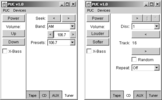
Generating remote control interfaces for complex appliances (p. 161-170)

Abstract plus

The personal universal controller (PUC) is an approach for improving the interfaces to complex appliances by introducing an intermediary graphical or speech interface. A PUC engages in two-way communication with everyday appliances, first downloading a specification of the appliance's functions, and then automatically creating an interface for controlling that appliance. The specification of each appliance includes a high-level description of every function, a hierarchical grouping of those functions, and dependency information, which relates the availability of each function to the appliance's state. Dependency information makes it easier for designers to create specifications and helps the automatic interface generators produce a higher quality result. We describe the architecture that supports the PUC, and the interface generators that use our specification language to build high-quality graphical and speech interfaces.

In Proceedings of UIST 2006
Article Picture

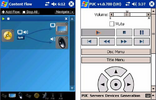
Huddle: automatically generating interfaces for systems of multiple connected appliances (p. 279-288)

Abstract plus

Systems of connected appliances, such as home theaters and presentation rooms, are becoming commonplace in our homes and workplaces. These systems are often difficult to use, in part because users must determine how to split the tasks they wish to perform into sub-tasks for each appliance and then find the particular functions of each appliance to complete their sub-tasks. This paper describes Huddle, a new system that automatically generates task-based interfaces for a system of multiple appliances based on models of the content flow within the multi-appliance system.

information appliance

In Proceedings of UIST 2006
Article Picture

Reflective physical prototyping through integrated design, test, and analysis (p. 299-308)

Abstract plus

Prototyping is the pivotal activity that structures innovation, collaboration, and creativity in design. Prototypes embody design hypotheses and enable designers to test them. Framin design as a thinking-by-doing activity foregrounds iteration as a central concern. This paper presents d.tools, a toolkit that embodies an iterative-design-centered approach to prototyping information appliances. This work offers contributions in three areas. First, d.tools introduces a statechart-based visual design tool that provides a low threshold for early-stage prototyping, extensible through code for higher-fidelity prototypes. Second, our research introduces three important types of hardware extensibility - at the hardware-to-PC interface, the intra-hardware communication level, and the circuit level. Third, d.tools integrates design, test, and analysis of information appliances. We have evaluated d.tools through three studies: a laboratory study with thirteen participants; rebuilding prototypes of existing and emerging devices; and by observing seven student teams who built prototypes with d.tools.